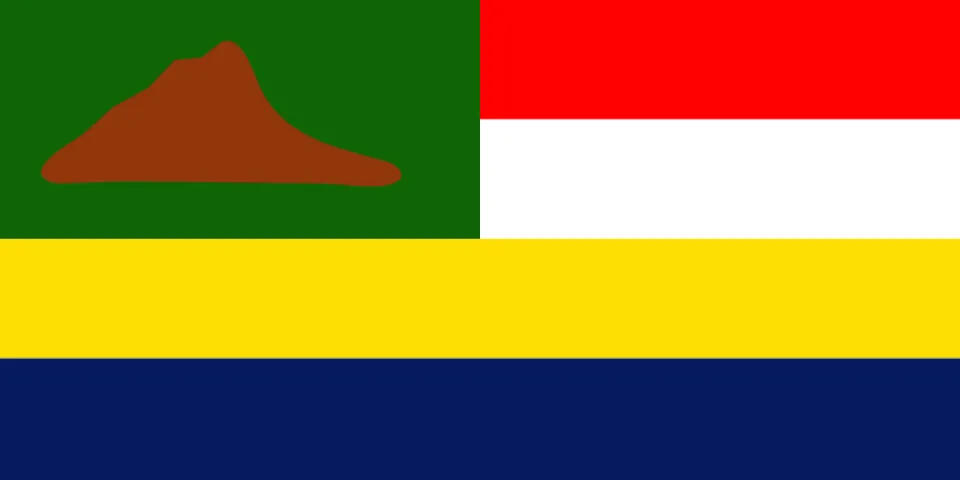
TODAY marks the third year of the official celebration of Sabah Day, symbolising the legal recognition of Sabah’s restored regional status following the 2021 amendment to the Federal Constitution. Before that amendment, Sabah Day was organised only by civil society groups and even required special permits for approval.
Yet, ironically, while we proudly celebrate “Sabah Day”, we still habitually call ourselves the “State of Sabah”. It is important to remember that when we say “Sabah Day”, it commemorates Sabah’s formation as a distinct political entity, existing independently before joining the federation.
I have observed that in Sabah, the word “state” is almost impossible to remove. It appears everywhere, not only in daily conversation, but also in the press, which still routinely uses terms such as “state government”, “state election”, “state cabinet”, “state assembly”, “state minister”, “state department” and so on. Civil organisations are also full of the word “state”. This habit of using the old term subtly weakens the significance of Sabah’s restored regional status.
Although Deputy Chief Minister Jeffrey Kitingan once proposed promoting the correct terminology, no concrete policy has been implemented.
By contrast, Sarawak has been more exemplary. After the 2022 amendment to the Sarawak Constitution came into effect, the title “Chief Minister” was officially changed to “Premier”, and the legislature dropped the word “state”, becoming simply the “Sarawak Legislative Assembly”. Afterwards, the Sarawak Premier’s Office, Sarawak Radio, and privately run newspapers began using “region” instead of “state”. These seemingly small changes in terminology gradually became accepted by society, allowing the idea of “the Sarawak Region” to take root in daily life.
Sabah, on the other hand, lacks an official strategy to promote such renaming. Although civic groups have long called for it, if the government itself continues to use “state” in websites, official documents, and leaders’ speeches, this kind of self-diminishment becomes the heaviest constraint.
With the regional election approaching and local identity and public sentiment running high, now is the best time to promote proper naming. If political parties truly wish to defend Sabah’s rights, the simplest and most direct promise would be to issue an administrative order immediately after taking office to replace all official titles with “region”. The media should also take the initiative by using “Sabah Region” in reports, guiding the change in public discourse.
It is worth noting that the Sabah Progressive Party has openly called for renaming the “Head of State” as the “Head of Region” (TYT Negara). This shows that renaming is not an isolated issue, but a symbolic project related to Sabah’s overall status.
I cannot help but joke: if I were to run for office myself, I would make “Restoring the Name of the Sabah Region” part of my manifesto. Rather than shouting slogans about autonomy and rights while weakening ourselves through terminology, it is better to start with the change of a single word.
The restoration of regional status still awaits full realisation in both name and substance. It is time for “Sabah Region” to move from the Constitution into daily life and become a natural part of how we speak.